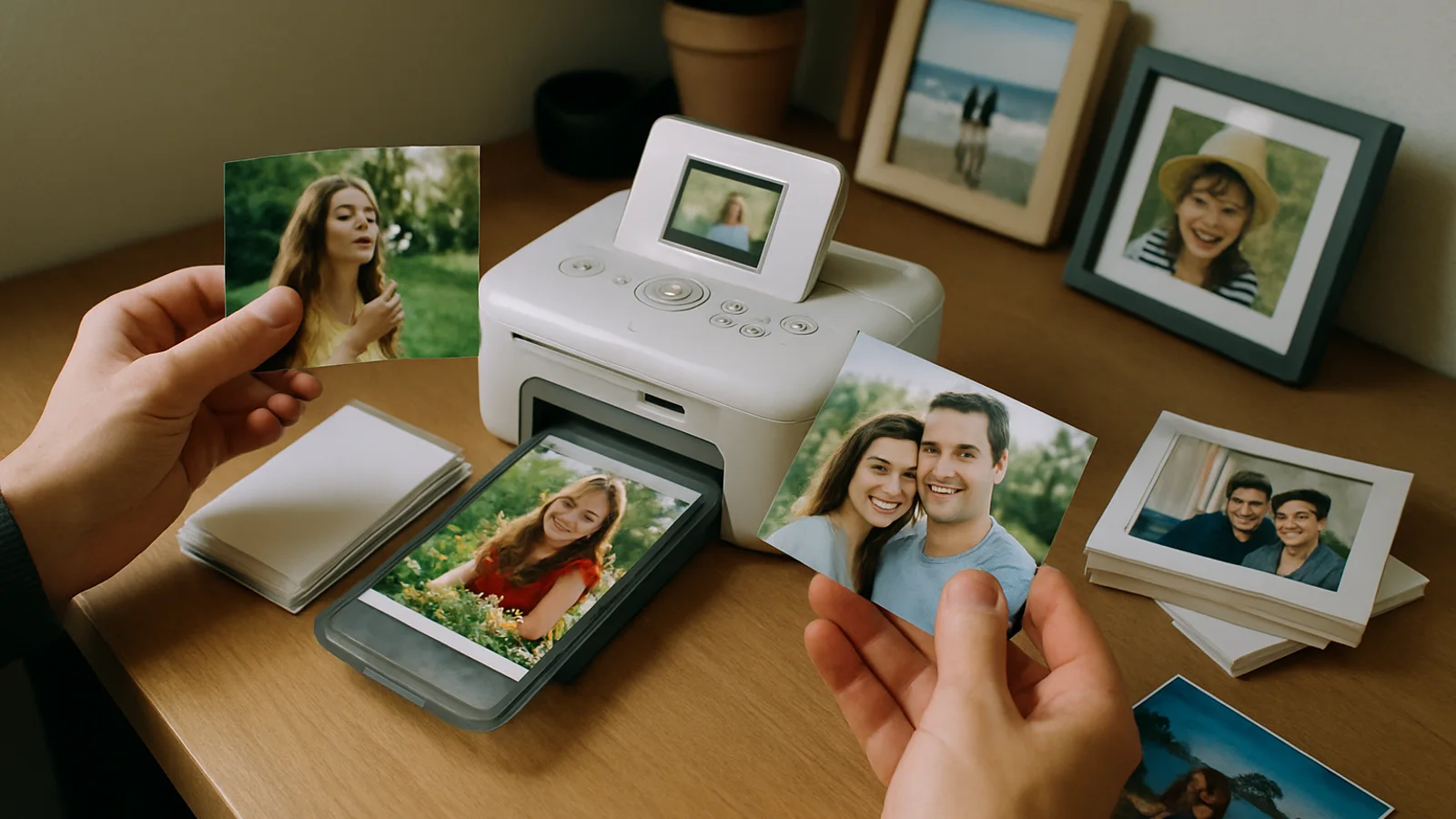
A photo printer is different from an ordinary office printer because the result is meant to be kept. My practical test is not whether the spec sheet looks impressive; it is whether the machine can turn a favorite image into a print that feels worth framing, mailing, gifting, or saving in an album.
For model-level research, I would pair this workflow with LeStallion’s photo printer recommendations for high-quality prints and judge each option against your real paper and ink habits.
If you want a shortlist beside these setup notes, open the best photo printer guide while comparing print size, refill cost, and photo-paper support.
Finish, weight, and size.
Dye, pigment, and refill rhythm.
Albums, gifts, art, portfolios.
I like to judge photo printer buying by the first print someone actually wants to keep: a family portrait, a portfolio proof, a craft project, or a framed image for a desk. That moment makes paper handling, ink habits, and color expectations feel more important than a long feature list.
1. Start with the prints you want to keep
For photo printer buying, begin with the size, finish, and frequency of the prints. Occasional glossy snapshots need a different setup than school portfolios, small art sales, or constant family albums.
In a plausible home-studio routine, I would keep one open pack of the preferred paper, store it flat, label the ink set, and make a small note about drying time. Those quiet habits prevent many disappointing prints.
2. Match ink and paper to the job
For photo printer buying, begin with the size, finish, and frequency of the prints. Occasional glossy snapshots need a different setup than school portfolios, small art sales, or constant family albums.
In a plausible home-studio routine, I would keep one open pack of the preferred paper, store it flat, label the ink set, and make a small note about drying time. Those quiet habits prevent many disappointing prints.
3. Think about print size honestly
For photo printer buying, begin with the size, finish, and frequency of the prints. Occasional glossy snapshots need a different setup than school portfolios, small art sales, or constant family albums.
In a plausible home-studio routine, I would keep one open pack of the preferred paper, store it flat, label the ink set, and make a small note about drying time. Those quiet habits prevent many disappointing prints.
4. Plan the refill shelf before buying
For photo printer buying, begin with the size, finish, and frequency of the prints. Occasional glossy snapshots need a different setup than school portfolios, small art sales, or constant family albums.
In a plausible home-studio routine, I would keep one open pack of the preferred paper, store it flat, label the ink set, and make a small note about drying time. Those quiet habits prevent many disappointing prints.
5. Give color a simple routine
For photo printer buying, begin with the size, finish, and frequency of the prints. Occasional glossy snapshots need a different setup than school portfolios, small art sales, or constant family albums.
In a plausible home-studio routine, I would keep one open pack of the preferred paper, store it flat, label the ink set, and make a small note about drying time. Those quiet habits prevent many disappointing prints.
6. Avoid the common photo-printer traps
For photo printer buying, begin with the size, finish, and frequency of the prints. Occasional glossy snapshots need a different setup than school portfolios, small art sales, or constant family albums.
In a plausible home-studio routine, I would keep one open pack of the preferred paper, store it flat, label the ink set, and make a small note about drying time. Those quiet habits prevent many disappointing prints.
7. Use a final desk checklist
For photo printer buying, begin with the size, finish, and frequency of the prints. Occasional glossy snapshots need a different setup than school portfolios, small art sales, or constant family albums.
In a plausible home-studio routine, I would keep one open pack of the preferred paper, store it flat, label the ink set, and make a small note about drying time. Those quiet habits prevent many disappointing prints.
Bottom line
The right photo printer is the one that makes the kind of prints you will actually display, gift, archive, or sell without turning every session into supply management.